
Tag Archive for: AI

AI scheduling tools tackle transit driver shortages

Transit agencies are increasingly turning to AI-driven scheduling platforms to tackle one of the sector’s biggest operational challenges–retaining bus drivers.

New digital tools allow operators to model different workforce scenarios, improve communication with drivers and reduce reliance on unscheduled overtime, issues that industry leaders say are fuelling burnout across the transit workforce.

The pressure is growing. Industry research suggests there is a global shortage of around 2.4 million transit workers, creating staffing gaps that often lead to forced overtime, fatigue and high turnover among bus drivers.

Speaking during an industry webinar hosted by Optibus, transit leaders said agencies must rethink how workforce planning is approached if they want to stabilise the profession.
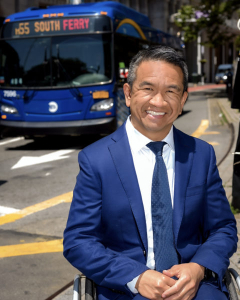
Chris Pangilinan, Transit Executive & Consultant

“Bus operators are public transportation. They’re the face of the system,” said Chris Pangilinan, Transit Executive & Consultant and former Senior Vice President of Buses at New York City Transit. “They’re often the only person a passenger interacts with.”

Despite the critical role drivers play in urban mobility systems, workforce planning has historically prioritised operational efficiency over driver wellbeing.

Pangilinan said many transit agencies continue to design schedules primarily around cost and service outputs rather than workforce sustainability.

“It’s a lot of optimisation around economics,” he said. “It’s not optimisation around mental health. It’s not optimisation for job satisfaction.”

Staffing shortages, combined with unpredictable rosters and frequent overtime, have created mounting pressure on drivers across many transit systems.

According to industry discussions during the webinar, unscheduled overtime remains one of the biggest contributors to fatigue and burnout.

“Unscheduled overtime is our problem,” Pangilinan said. “It’s a symptom of a mismanaged roster and a mismanaged system.”

These pressures are prompting agencies to rethink how services are planned and how technology can help improve workforce conditions while maintaining reliable transit services.

Advanced scheduling platforms are helping transit agencies analyse operational data and test different workforce and service scenarios.

Waiching Wong, Global VP, Customer Success at Optibus, said digital planning tools allow agencies to explore multiple scheduling approaches before implementing service changes.

Waiching Wong, Global VP, Customer Success at Optibus

“What these tools do is let agencies create a lot of different scenarios,” Wong said. “You can see the trade-offs and figure out what works best for the operation.”

By modelling alternative shift patterns and operational strategies, agencies can better understand how decisions affect both service delivery and driver workloads.

The platforms can also support real-time communication with drivers and operational teams, helping agencies respond more effectively to disruptions and service changes.

While technology alone will not resolve workforce shortages, transit leaders say better planning tools can help agencies rethink long-standing operational practices.

That includes designing more predictable schedules, managing overtime more effectively and improving communication with drivers once they are on the road.

“Bus operators love their jobs,” Pangilinan said. “It’s our job as leaders to support them.”

Main image: Wellphotos | Dreamstime.com

New AI model helps cities analyse traffic risks at scale

Researchers at NYU Tandon School of Engineering have developed a multimodal AI system that analyses traffic-camera footage to detect collisions and near-misses, providing cities with a way to draw safety insights from existing video networks without extensive manual review.

The system, SeeUnsafe, has been recognised with New York City’s Vision Zero Research Award and is published in Accident Analysis and Prevention. It applies multimodal large language models (MLLMs) to long-form traffic footage, aiming to support more continuous analysis than traditional crash-based approaches.

Many cities now collect extensive traffic video but still rely on limited data sources because reviewing footage is labour-intensive. Speaking to Cities Today, Kaan Ozbay, Senior Author of the SeeUnsafe paper and Director of the C2SMART Transportation Research Center at NYU Tandon School of Engineering, said this has created a persistent gap.

Kaan Ozbay, Senior Author of the SeeUnsafe paper and Director of the C2SMART Transportation Research Center

“Cities have rapidly expanded their traffic-camera networks, but their ability to learn from all that video hasn’t kept up,” he said. “Manual video analysis is extremely time-consuming and expensive, and custom computer-vision pipelines require specialised engineering, site-specific tuning, and ongoing maintenance.”

Ozbay said this has limited the practical value of large video archives for day-to-day decision-making.

“This gap is why ‘more data leads to safer roads’ hasn’t become reality,” he added. “The advent of MLLMs brings about a paradigm shift, enabling the continuous video to be transformed into automated, scalable safety insights.”

The model combines object-level signals with contextual reasoning. Unlike traditional pipelines that separate tasks such as detection, tracking and speed estimation, it interprets traffic scenes as a whole.

“SeeUnsafe uses MLLMs to understand traffic scenes more like a human safety engineer, rather than as a collection of separate vision tasks,” Ozbay said. “This kind of scene-level understanding is essential for spotting rare but important events like collisions and near-misses that classical CCTV often struggles to capture.”

Testing on the Toyota Woven traffic-safety dataset showed accuracy levels above those of comparison models. However, Ozbay said results from controlled datasets do not automatically translate to the complexity of real-world urban environments.

“SeeUnsafe’s accuracy is already promising in controlled settings, but there is still a gap before it is ready for fully reliable citywide deployment in a place like New York,” he said. Factors such as lighting, weather, camera position and unusual behaviour can affect performance.

The system also produces natural-language summaries describing the conditions and movements associated with detected events. Ozbay said this format helps integrate the tool into existing public-sector workflows.

“This system lowers the barrier between users and analytical outcomes by translating huge volumes of complex, unstructured video into insights that non-technical stakeholders can immediately understand,” he said. “It fits existing workflows, reduces the learning curve, and helps agencies adopt AI-assisted safety analysis without having to change how they already review and justify decisions.”

Ozbay added that the same technology could be used in wider mobility-planning or operational contexts as cities strengthen data infrastructure.

“We see fixed traffic cameras as the ‘0 to 1’ step,” he explained. “Once that foundation is in place, the same core technology can naturally extend beyond fixed cameras.”

The long-term goal is to now support a clearer understanding of how risk develops across road networks.

“We’re already seeing parallel efforts in urban mobility and autonomous driving, and SeeUnsafe is positioned to plug into that ecosystem as the ‘traffic safety intelligence layer’ that connects real-world video, virtual models, and operational decisions,” he said.

Main image: Juliengrondin | Dreamstime.com