
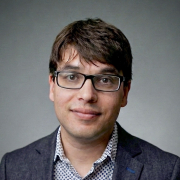
Former San Francisco transport strategy chief joins Cities Today Institute
The Cities Today Institute (CTI) has appointed Jonathan Rewers (pictured) as Director of Mobility for North America, strengthening its senior mobility leadership as cities across the region face mounting pressure to deliver transport reform amid rapid technological change and funding constraints.
Rewers brings nearly three decades of experience in city government, including more than 15 years at the San Francisco Municipal Transportation Agency (SFMTA), where he most recently served as Chief Strategy Officer.
In his new role, he will support agendas, provide strategic direction, and moderate the Institute’s North America mobility meetings, working closely with senior city officials and industry partners.
For Rewers, the move reflects a belief that cities need spaces where leaders can step back from day-to-day pressures and confront the scale of change reshaping urban transport, while staying focused on delivery rather than theory.
“Cities are where the world changes,” he said. “We’re in a period where cities need to be beyond the minimum expectation that the status quo is okay. The minimum expectation should be that we move at the pace of change.”
Rewers sees the Cities Today Institute as a rare forum where cities can step away from modal silos and engage in practical, cross-cutting discussions about how transport systems function.
Through closed-door meetings and peer networks, the Institute convenes senior city leaders and industry partners with a shared focus on implementation.
“When we focus on public transport alone, or safety alone, or freight alone, we end up disappointing,” Rewers said. “Everything is interconnected.”
His ambition in the role is to help city leaders not only share ideas but understand how to implement them within complex political and institutional environments.
“Every time I participated in these discussions, I walked out with a brand-new idea,” he said. “What I want to bring is not only generating those ideas but talking about how you actually achieve them.”
Learning from disruption, not resisting it
Rewers’ outlook has been shaped less by abstract strategy than by proximity to disruption. His career at SFMTA coincided with a period when San Francisco found itself repeatedly at the forefront of global mobility change, often before other cities had time to react.
“I could see the headquarters of Uber from the window of my office,” he said. “I saw what that did to the taxi industry. I saw scooters show up from nowhere. I saw micromobility show up.”
Ride-hailing platforms scaled rapidly. Dockless e-scooters appeared on pavements almost overnight. Private commuter buses, delivery services and early autonomous vehicle pilots blurred long-standing boundaries between public and private transport. The speed and visibility of change forced city officials to respond in real time, often without established playbooks.
“We were so afraid of the rapid change, we tried to slow it down to our pace,” Rewers said. “What I learned over time is that we need to join the rapid pace of change.”
That experience now underpins how he thinks about leadership in cities more broadly. While innovation is unavoidable, Rewers cautions against focusing on the new at the expense of the fundamentals.
“Sometimes we get so excited about the new that we forget about the need for strong foundations,” he said, pointing to asset management, infrastructure condition and technology ecosystems. “You let those crumble, and everything else becomes harder.”
Lessons from San Francisco’s experience
Despite San Francisco’s reputation as a testing ground for scooters, ride-hailing and autonomous vehicles, Rewers argues that its most influential contribution to urban transport thinking was less visible but more durable.
“The number one thing that came out of San Francisco in my time is variable pricing on parking and using parking management as congestion management,” he said. “Using the kerb to manage traffic, manage the movement of goods, and actually reduce congestion and speed up public transport.”
By reframing parking and kerb space as active policy tools rather than static assets, the city helped shape how transport authorities around the world now approach congestion, freight loading and bus priority.
San Francisco’s later embrace of autonomous vehicle testing also reflected lessons learned from earlier disruption.
“We learned with Uber and Lyft and scooters to have conversations with industry and the private sector,” Rewers said. “How do you create an environment where you’re a lab? That’s something cities can learn from San Francisco.”
The constraint cities struggle to break
Looking across North American cities, Rewers points to a familiar set of challenges, but argues that funding alone does not explain why progress often stalls.
“Money and public trust are definitely in the top two, and they’re connected,” he said. “When cities can’t deliver at the pace of change, disappointment grows. That disappointment reduces trust, and then the revenue you need becomes impossible to raise.”
He describes many cities as caught in a vicious circle, where limited delivery fuels scepticism, which in turn constrains the funding required to improve services.
Freight and goods movement, he argues, are an increasingly important part of that equation. Historically treated as a state or national issue, goods movement has become a city-scale challenge as on-demand delivery reshapes streets and kerbs.
“We’re used to goods being moved on freight trains and big trucks,” he said. “Now we’re having mass movement of goods in smaller vehicles at higher volume. That creates more congestion, more safety issues, and more disappointment if it’s not managed.”
Even emerging technologies such as drones, Rewers suggests, should be evaluated through the same systems lens.
“What if we said drones are a new way to manage congestion?” he said. “How do we move goods off the ground and out of our roads?”
Rikesh Shah, Global Urban Mobility Director at the Cities Today Institute, said Rewers’ appointment strengthens its North America mobility work.
“I am delighted that Jonathan will be joining our team leading our North America activity on urban mobility,” he said. “His wealth of transport and city experience will enable us to effectively identify key mobility challenges facing cities in North America, and shape opportunities through public private collaboration on how we make cities better. It’s fantastic that we can use his creativity and experience in this capacity to take forward the Institute’s activities.”
For Rewers, the motivation remains rooted in confidence in what cities can achieve when the right conversations happen.
“I’m one thousand percent confident that the ideas and actions that will come out of this work will be groundbreaking,” he said. “You’re not only going to see ideas. You’re going to see real change.”