
Tag Archive for: public transport

AI scheduling tools tackle transit driver shortages

Transit agencies are increasingly turning to AI-driven scheduling platforms to tackle one of the sector’s biggest operational challenges–retaining bus drivers.

New digital tools allow operators to model different workforce scenarios, improve communication with drivers and reduce reliance on unscheduled overtime, issues that industry leaders say are fuelling burnout across the transit workforce.

The pressure is growing. Industry research suggests there is a global shortage of around 2.4 million transit workers, creating staffing gaps that often lead to forced overtime, fatigue and high turnover among bus drivers.

Speaking during an industry webinar hosted by Optibus, transit leaders said agencies must rethink how workforce planning is approached if they want to stabilise the profession.
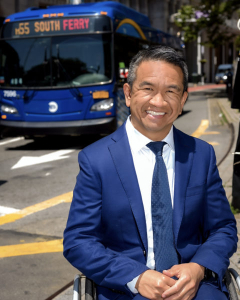
Chris Pangilinan, Transit Executive & Consultant

“Bus operators are public transportation. They’re the face of the system,” said Chris Pangilinan, Transit Executive & Consultant and former Senior Vice President of Buses at New York City Transit. “They’re often the only person a passenger interacts with.”

Despite the critical role drivers play in urban mobility systems, workforce planning has historically prioritised operational efficiency over driver wellbeing.

Pangilinan said many transit agencies continue to design schedules primarily around cost and service outputs rather than workforce sustainability.

“It’s a lot of optimisation around economics,” he said. “It’s not optimisation around mental health. It’s not optimisation for job satisfaction.”

Staffing shortages, combined with unpredictable rosters and frequent overtime, have created mounting pressure on drivers across many transit systems.

According to industry discussions during the webinar, unscheduled overtime remains one of the biggest contributors to fatigue and burnout.

“Unscheduled overtime is our problem,” Pangilinan said. “It’s a symptom of a mismanaged roster and a mismanaged system.”

These pressures are prompting agencies to rethink how services are planned and how technology can help improve workforce conditions while maintaining reliable transit services.

Advanced scheduling platforms are helping transit agencies analyse operational data and test different workforce and service scenarios.

Waiching Wong, Global VP, Customer Success at Optibus, said digital planning tools allow agencies to explore multiple scheduling approaches before implementing service changes.

Waiching Wong, Global VP, Customer Success at Optibus

“What these tools do is let agencies create a lot of different scenarios,” Wong said. “You can see the trade-offs and figure out what works best for the operation.”

By modelling alternative shift patterns and operational strategies, agencies can better understand how decisions affect both service delivery and driver workloads.

The platforms can also support real-time communication with drivers and operational teams, helping agencies respond more effectively to disruptions and service changes.

While technology alone will not resolve workforce shortages, transit leaders say better planning tools can help agencies rethink long-standing operational practices.

That includes designing more predictable schedules, managing overtime more effectively and improving communication with drivers once they are on the road.

“Bus operators love their jobs,” Pangilinan said. “It’s our job as leaders to support them.”

Main image: Wellphotos | Dreamstime.com

New global index enables live transit benchmarking

A new interactive benchmarking platform has been launched, enabling transport authorities and operators to compare first-stop on-time performance across more than 1,000 locations worldwide using open data from the most recent 28-day period.

The Mosaiq Global Public Transit Index aggregates publicly available feeds into a single interface that allows side-by-side comparison between cities, regions and countries.

The platform replaces static reports with a rolling, regularly updated view of performance. Users can examine early, on-time and late running percentages and see how those metrics differ depending on local policy definitions.

Miki Szikszai (pictured), CEO, Snapper Services, told Cities Today that the initiative was developed in response to limitations in traditional benchmarking approaches and the fragmented nature of existing comparisons.

“The data that they’re working with is often really stale and it lacks context,” he said. “You can go to lots of sites and you can see a point in time where someone says, in 2024 here’s how our network performed, and that’s not really that helpful if you want to have really good context around how you’re performing, who your peers are, and how you can maybe take the next step.”

The index enables agencies to explore performance across hundreds of jurisdictions using the same underlying framework. It is intended to help leaders understand how their networks compare and identify potential peers for further analysis.

“We’re able to show data for February for close to 1,400 locations around the world, so you can explore and compare and work out actually how you’re doing, who you can learn from and what the next step might look like.”

A central feature of the platform is the visibility it gives to policy settings that shape punctuality metrics. Thresholds for early, on-time and late services differ significantly between countries and regions.

“There’s usually a window that’s used to define what is early, what is on time, what is late,” Szikszai said. “That varies around the world. Even being able to compare policy settings is really important.”

Szikszai said transport executives should begin by examining their own network before expanding outward to comparable peers. The objective is to identify systems operating under similar constraints rather than defaulting to headline international examples.

“They should look at their own city or location or country, and then they should just explore,” he said. “Start to get a sense of, actually, who might I learn from?”

He cautioned against drawing conclusions from headline performance figures without understanding structural differences.

“One of the stories I always hear is someone goes overseas and comes back saying, you should look at Tokyo, their public transport is amazing,” he commented. “But they won’t necessarily have that context of being able to even look at Tokyo and say, yes, Tokyo is amazing, but they have the narrowest on-time performance window in the world.”

The platform reflects only open data that has been published by authorities and operators. Where data is not available, the absence is visible within the summary results.

“If the train data is there, then we will be surfacing that,” he said. “If the data is not published as open data, then it will not appear at that summary level.”

In the UK, Szikszai said levels of open data maturity differ significantly between regions. Referring to London, he highlighted the gap between operational performance and publicly available datasets.

“One of the things that’s fascinating about London is it’s usually held up as a real paragon,” he added. “It does perform well, we know from closed data that we can see, but the open data is really weak. That’s because of the old iBus technology that they have there. They’ve got to do quite a bit of work on their infrastructure there to kind of lift it to the same level as other regions around the UK.”

Access to the index does not require registration and is positioned as an open resource for the sector.

“They don’t even need to log in,” he said. “This is open and free to use for everyone in terms of the index, because we think it really needs to be something that is a wide resource.”

Szikszai described the scale and openness of the dataset as distinctive in the market.

“We think this is a world first,” he added. “I don’t think there is anything anywhere that has this amount of data available for this many locations that is open and free.”

Images: Snapper Services

Venice tests incentives to shift travel behaviour

In Venice, a new generation of mobility apps is testing whether cashback, vouchers and gamified rewards can succeed where congestion charges and visitor taxes have struggled, nudging travellers onto public transport and bicycles during peak tourism periods.

The pilots form part of the Toyota Mobility Foundation Sustainable Cities Challenge Venice, which is backing behaviour-change solutions designed to increase use of existing low- and zero-carbon transport modes. The focus is on the mainland and motorised islands, where congestion linked to tourism and daily commuting continues to place pressure on roads and public transport networks.

Rather than introducing new infrastructure or additional restrictions, the challenge centres on motivation and habit. Finalists are testing whether incentives, information and behavioural nudges can reshape everyday travel decisions and smooth crowding before it builds in the historic centre.

Rewards over restrictions

One of the finalists, Andemo, developed by Factual Consulting, combines journey planning with a cashback-style rewards system aimed at making sustainable travel more appealing.

Josep Laborda, CEO & Managing Partner at Factual Consulting, told Cities Today that the app’s strongest impact has come from reframing greener travel as something users actively benefit from.

Josep Laborda, CEO & Managing Partner at Factual Consulting

Josep Laborda, CEO & Managing Partner at Factual Consulting

“The most impactful feature has been the ability to turn sustainable travel into a rewarding experience,” Laborda said. “By combining a simple journey planner with gamified rewards based on a cashback system, we aim to make green choices the obvious ones.”

Early usage data suggests the approach is encouraging more flexible travel behaviour. Laborda said that 61 percent of active users now use the app specifically to plan trips that combine different modes of transport. Engagement with park-and-ride infrastructure is also growing, with 12 percent of active users claiming rewards for using bike parks on the mainland.

“While this doesn’t necessarily mean everyone abandoned their car overnight, it is strong evidence that when you make using a park-and-ride facility rewarding, people are more keen to engage with that infrastructure,” he said.

Nudging travel before congestion hits

Beyond encouraging modal shift, Andemo is also being positioned as a crowd-management tool.

“Our solution aims to smooth out the flow of people by offering smarter, stress-free alternatives before travellers even reach the busiest areas,” he added.

The app highlights park-and-ride hubs such as Piazzale Candiani Bike Park and uses in-app notifications linked to weather conditions or wellbeing prompts to influence travel choices. Integration of real-time bus data is planned for early 2026.

Another finalist, Bella Mossa, developed by BetterPoints, takes a similar incentives-based approach but places particular emphasis on user autonomy. Jack Windle, Chief Sustainable Transport Officer at BetterPoints and developer of Bella Mossa, told Cities Today that long-term behaviour change depends on giving users meaningful choice.

Jack Windle, Chief Sustainable Transport Officer at BetterPoints

Jack Windle, Chief Sustainable Transport Officer at BetterPoints

“The most effective reward to sustain long-term behaviour change is choice,” Windle said. “That’s why Bella Mossa rewards sustainable trips with a currency–BeiPunti–which our members can spend or donate to charity.”

Measuring behaviour change

In Venice, popular rewards have included gelato and supermarket vouchers, while experience in the UK has shown coffee vouchers to be especially effective in sustaining participation.

Windle said the flexibility of the reward system allows users to save BeiPunti for larger purchases or donate them to charities, including Amnesty International.

The company has also begun to generate tangible data for city authorities. Windle said participants have recorded 52,789 sustainable trips, covering 134,956 kilometres. Follow-up questions show that 61 percent of respondents said a recorded trip replaced a car journey, suggesting more than 32,000 avoided car trips and an estimated saving of 12 tonnes of CO₂ emissions. A time-series analysis of GPS-recorded trips showed that two thirds of drivers used their cars on fewer days per week after taking part.

For Andemo, the early signals suggest the value lies as much in mindset change as in immediate revenue impacts.

“While it is early days for tracking direct revenue, the evidence for a positive shift in mindset and experience is already strong,” Laborda said. “These numbers tell us we are successfully building a community that is ready to embrace a greener way to move around the city.”

The winners of the challenge are set to be announced by the end of May.

Main image: Bella Mossa

Transit tech lab sets priorities around infrastructure and data

New York’s Transit Tech Lab has opened applications for its 2026 cohort, centred on real-time infrastructure monitoring and data and workflow modernisation. The focus reflects growing operational pressure on transit agencies to improve visibility and productivity.

Led by the Partnership Fund for New York City alongside the Metropolitan Transportation Authority, the NYC Department of Transportation and the Port Authority of New York and New Jersey, the initiative is seeking technologies that can strengthen asset monitoring, consolidate data, and improve workforce productivity across complex transit networks.

According to Stacey Matlen, Senior Vice President of Innovation at the Partnership for New York City, the focus reflects growing concern among agencies about limited system-wide visibility across ageing infrastructure.

Stacey Matlen, Senior Vice President of Innovation at the Partnership for New York City

“Much of their infrastructure is ageing, complex, and spread across large geographies, and data about asset condition, performance, and maintenance history is often fragmented or incomplete,” she told Cities Today. “That makes it difficult to move from reactive maintenance to proactive lifecycle management.”

Now in its eighth year, the Transit Tech Lab has received more than 1,000 applications since 2018 and supported dozens of proof-of-concepts and longer-term pilots. This year’s challenges are structured around two themes: advanced infrastructure monitoring, including real-time condition tracking and safety risk detection, and data and workflow modernisation, spanning analytics, fraud detection, and workforce optimisation.

Matlen said while pressure to deliver more with constrained budgets has remained constant, agency priorities have shifted over time.

“When the Lab was launched in the aftermath of the 2017 ‘Summer of Hell,’ the focus was squarely on immediate reliability issues like signalling, track conditions, and service disruptions that riders felt every day,” she said. “Today, agencies are thinking more holistically about infrastructure visibility and asset lifecycles.”

The scope of the 2026 challenges was defined through engagement with more than 100 operational staff and senior executives across participating agencies, a process designed to surface both strategic risks and frontline realities.

“Agencies are focused on reducing operational blind spots, whether that’s through real-time infrastructure monitoring, better detection of fraud and anomalies, or tools that help a constrained workforce operate more efficiently,” Matlen said.

She added that projects are most likely to scale when outcomes are clearly defined from the outset.

“The Lab’s structured process with clear decision points and defined milestones helps agencies and companies align early on quantifiable goals and KPIs tied to demonstrating a ROI,” she said.

Applications for the 2026 Transit Tech Lab close on 27 February.

Main image: BKit1nyc | Dreamstime.com