

AI scheduling tools tackle transit driver shortages
Transit agencies are increasingly turning to AI-driven scheduling platforms to tackle one of the sector’s biggest operational challenges–retaining bus drivers.
New digital tools allow operators to model different workforce scenarios, improve communication with drivers and reduce reliance on unscheduled overtime, issues that industry leaders say are fuelling burnout across the transit workforce.
The pressure is growing. Industry research suggests there is a global shortage of around 2.4 million transit workers, creating staffing gaps that often lead to forced overtime, fatigue and high turnover among bus drivers.
Speaking during an industry webinar hosted by Optibus, transit leaders said agencies must rethink how workforce planning is approached if they want to stabilise the profession.
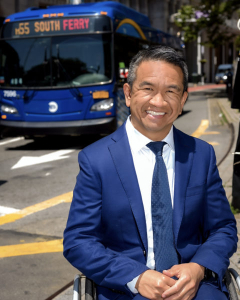
Chris Pangilinan, Transit Executive & Consultant
“Bus operators are public transportation. They’re the face of the system,” said Chris Pangilinan, Transit Executive & Consultant and former Senior Vice President of Buses at New York City Transit. “They’re often the only person a passenger interacts with.”
Despite the critical role drivers play in urban mobility systems, workforce planning has historically prioritised operational efficiency over driver wellbeing.
Pangilinan said many transit agencies continue to design schedules primarily around cost and service outputs rather than workforce sustainability.
“It’s a lot of optimisation around economics,” he said. “It’s not optimisation around mental health. It’s not optimisation for job satisfaction.”
Staffing shortages, combined with unpredictable rosters and frequent overtime, have created mounting pressure on drivers across many transit systems.
According to industry discussions during the webinar, unscheduled overtime remains one of the biggest contributors to fatigue and burnout.
“Unscheduled overtime is our problem,” Pangilinan said. “It’s a symptom of a mismanaged roster and a mismanaged system.”
These pressures are prompting agencies to rethink how services are planned and how technology can help improve workforce conditions while maintaining reliable transit services.
Advanced scheduling platforms are helping transit agencies analyse operational data and test different workforce and service scenarios.
Waiching Wong, Global VP, Customer Success at Optibus, said digital planning tools allow agencies to explore multiple scheduling approaches before implementing service changes.

Waiching Wong, Global VP, Customer Success at Optibus
“What these tools do is let agencies create a lot of different scenarios,” Wong said. “You can see the trade-offs and figure out what works best for the operation.”
By modelling alternative shift patterns and operational strategies, agencies can better understand how decisions affect both service delivery and driver workloads.
The platforms can also support real-time communication with drivers and operational teams, helping agencies respond more effectively to disruptions and service changes.
While technology alone will not resolve workforce shortages, transit leaders say better planning tools can help agencies rethink long-standing operational practices.
That includes designing more predictable schedules, managing overtime more effectively and improving communication with drivers once they are on the road.
“Bus operators love their jobs,” Pangilinan said. “It’s our job as leaders to support them.”
Main image: Wellphotos | Dreamstime.com